
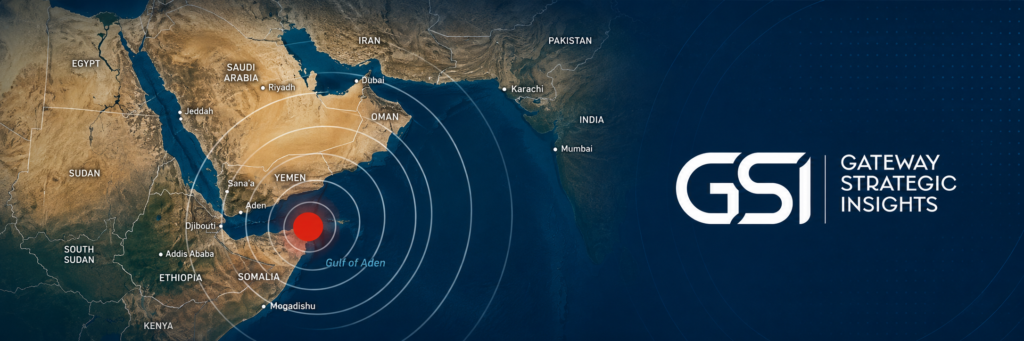
Magnitude 6.0 Earthquake Strikes Gulf of Aden, No Maritime Disruption Reported
A magnitude 6.0 earthquake struck the eastern Gulf of Aden shortly after midnight on Friday, 28 August 2026, drawing attention to the seismic vulnerability of one of the world’s most strategically important maritime corridors.
The U.S. Geological Survey recorded the earthquake at approximately 12:07 a.m. local time, with its epicentre around 145 kilometres north of Caluula, on Somalia’s northeastern coast, at a depth of approximately 10 kilometres. Other international monitoring agencies placed the magnitude between 6.0 and 6.2, with slightly different depth estimates.
No Significant Damage or Maritime Disruption
As of Friday evening, no casualties, major physical damage, or disruption to maritime operations had been reported on either side of the Gulf.
The Global Disaster Alert and Coordination System classified the earthquake as a Green Alert, indicating a low expected humanitarian impact. Shaking was estimated at around Intensity IV on the Modified Mercalli scale in parts of Bari and Hadhramaut.
No significant tsunami impact was reported, and commercial shipping through the Gulf of Aden continued without reported disruption linked to the earthquake.
Berbera and the Somaliland Coast
There have also been no reports of earthquake-related damage or operational disruption at Berbera Port or elsewhere along Somaliland’s coastline. The epicentre was located considerably farther east, closer to the maritime area between Caluula and Hadhramaut.
The event nevertheless highlights the importance of seismic preparedness, emergency response planning, and resilient infrastructure as ports and coastal economic zones across the Gulf of Aden continue to expand.
Maritime Security Risks Remain
Although the earthquake passed without significant reported consequences, the wider Gulf of Aden and Red Sea maritime environment remains exposed to persistent security risks, including piracy, attacks on commercial vessels, and broader regional geopolitical tensions.
Recent incidents involving commercial shipping demonstrate that the main immediate risks to maritime activity remain security-related rather than seismic. Piracy and attacks around the Gulf of Aden, Bab el-Mandeb, and Red Sea continue to affect perceptions of risk across this vital trade corridor.
The Red Sea-Bab el-Mandeb-Gulf of Aden system remains central to international trade, energy flows, port competition, and the strategic interests of both Horn of Africa and Gulf states.
GSI will continue to monitor seismic activity, maritime security, and geopolitical developments across the Gulf of Aden and the wider Red Sea region.